












The highly anticipated annual White House Correspondents’ Dinner was cut short last month when a gunshot interrupted the event. President Trump and other dignitary attendees were quickly escorted out by the Secret Service or their respective private security details. The only injury was to the assailant.
The shots rang out before any speeches were made at the dinner. Nearly 2,600 attendees were present, many of whom took cover under tables while VIP guests were evacuated. The President has suggested that the dinner be delayed by a month as a consequence.
The high-level event is held by the White House Correspondents’ Association (WHCA) annually at the Washington Hilton Hotel. It is traditionally attended by the president of the United States, his VP, and top cabinet officials, along with hundreds of journalists, reporters, and high-profile guests. Usually, the event has a lighthearted tone, with speeches, roasts, and light banter between journalists and politicians, in a night meant to celebrate the freedom of the press acknowledged in the First Amendment.
The shooter has been identified as Cole Tomas Allen, a 31-year-old tutor, engineer, and Caltech alumnus from Torrance, California. He emailed a 1,000-word manifesto to his family members, which prompted his brother to file a report to officials.
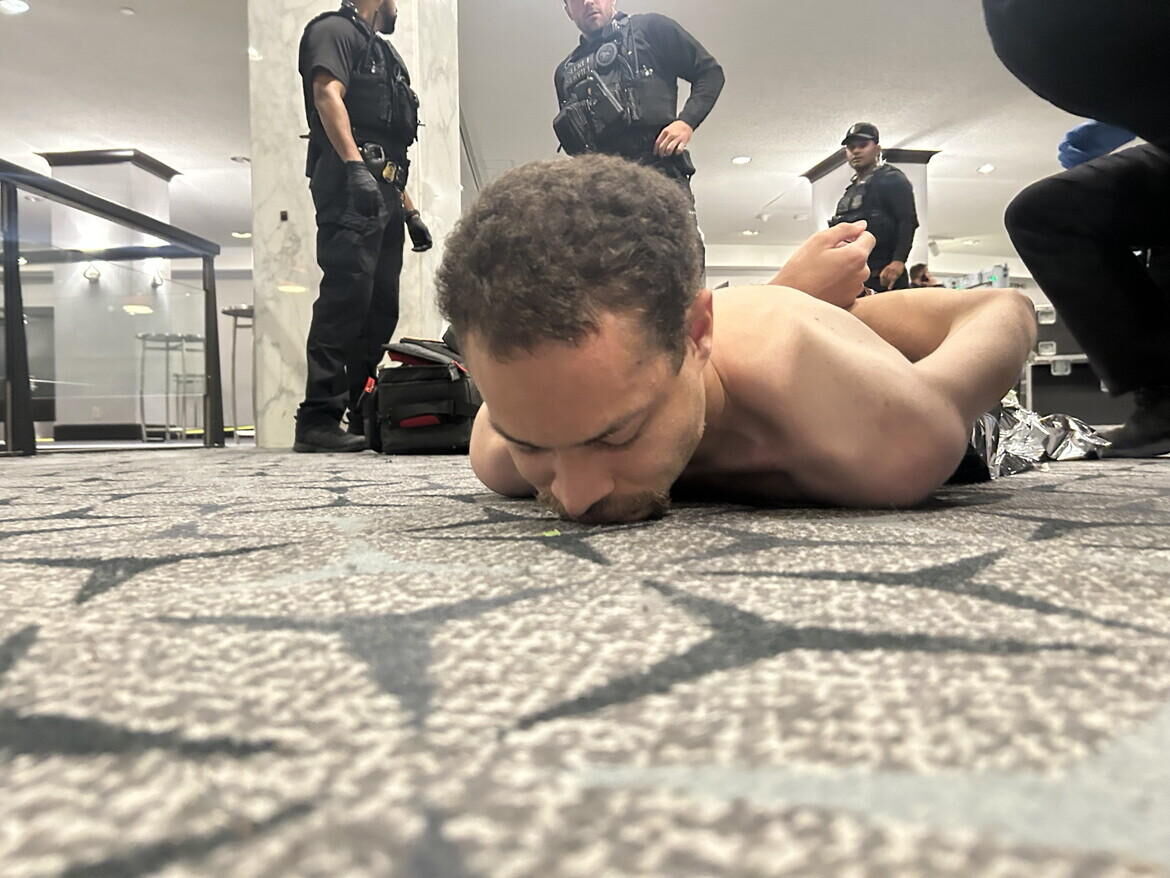
The evening of the dinner, Allen attempted to breach a security checkpoint with weapons at approximately 8:36 PM. The metal detector he was caught near was on the terrace level, frighteningly close to the underground ballroom in which the event was being hosted. He was armed with a 12-gauge Mossberg shotgun, a .38-caliber semi-automatic pistol, and multiple knives.
During the incident, Allen shot a Secret Service officer, who fortunately was protected by a bulletproof vest, and Allen was tackled at the scene of the crime. The Secret Service took off Allen’s shirt during a search for any other concealed weapons, and Allen injured his knee during the altercation.
Allen was subsequently charged with gun crimes and attempted assassination. He went to court for these actions on April 27th, two days after the incident.
The shooting has brought up the issue of the effectiveness of the security personnel surrounding major public figures. The concerns stem from questions about whether modern risks warrant reform to long-standing security protocols within the agency.
The president and his allies have used the shooting as a justification for the controversial construction of the White House ballroom, designed to move high-profile events onto the executive mansion’s grounds; the plan has been critiqued as being excessively extravagant by opponents in Congress and has faced legal delays. It was originally meant to be privately funded but proposals from supporters have suggested a potential shift to use taxpayer dollars for funding instead.
The security breach intensified the debate over the proposed White House State Ballroom, which is set to replace the recently demolished East Wing. Supporters of the construction argue that current off-site venues like the Washington Hilton present unmanageable security risks for the President and Vice President. Meanwhile, opponents in Congress have raised concerns over the project’s $400 million budget, questioning whether a major structural expansion is necessary. The administration continues to advocate for the project as essential, while critics maintain it as excessive.