






















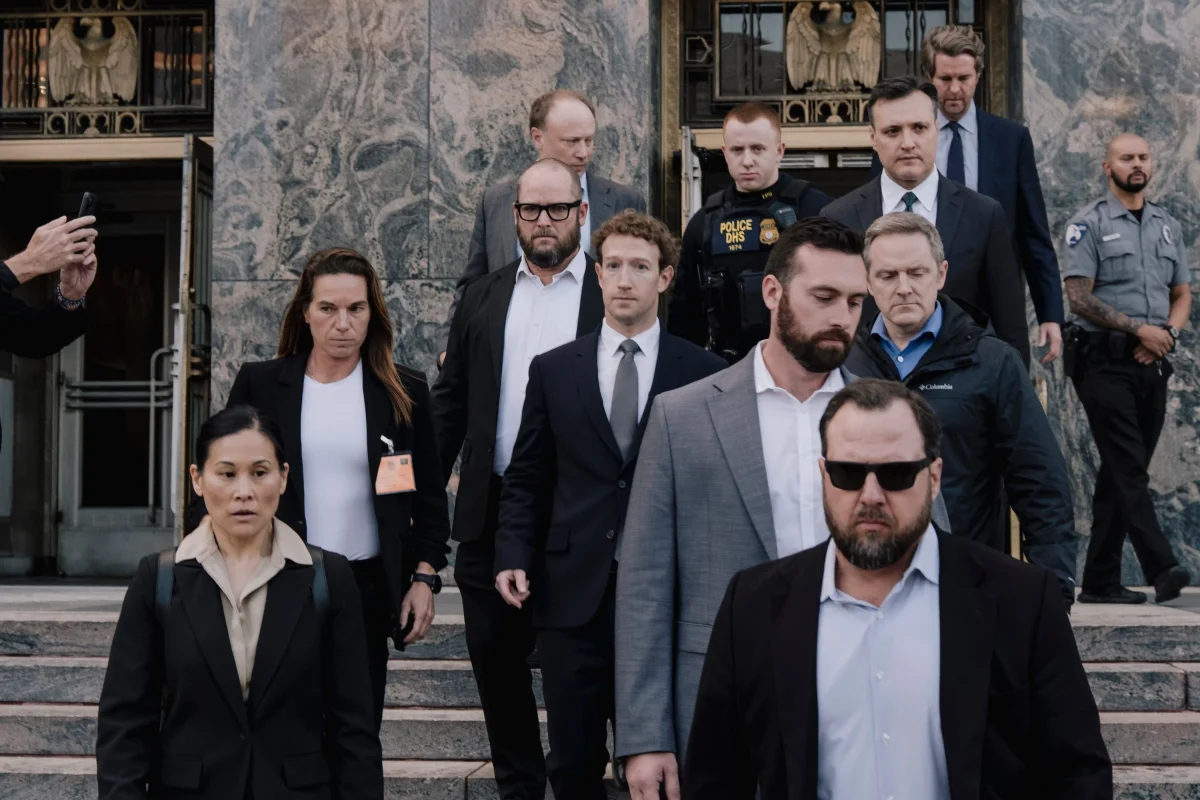
Over the past month, a series of major Republican primary elections across the country have reshaped the political landscape and sent conflicting shockwaves through the electorate.

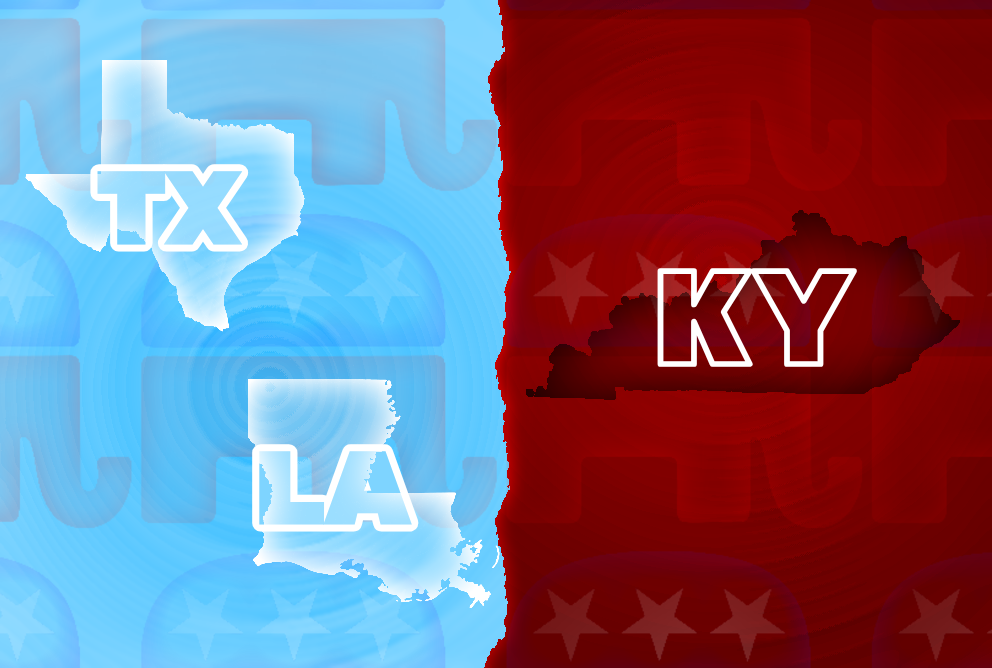
Primaries are elections within a party that determine who will represent the party in a general election. These Republican state primaries are in anticipation of the upcoming 2026 midterm elections, where whoever is chosen in the primaries faces off against the Democratic candidate. There are four elections that have drawn significant media attention so far: Kentucky’s 4th District’s (KY-04) House seat, one of Louisiana’s senate seats, one of Texas’s senate seats, and Iowa’s governor seat. As a result of the primaries, Representative Thomas Massie in Kentucky lost, as did Senator Bill Cassidy in Louisiana. Gubernatorial candidate Zach Lahn pulled off an upset in Iowa and candidate for Senate Ken Paxton won by a landslide in Texas.
Because I am not a Republican and I am not a Democrat, when I judge primary winners and losers, I ignore if it will actually benefit the party. I look only at what is good for the direction of the nation. If the Democrats actually bothered to run a genuinely competitive primary cycle, I would subject them to the exact same standards. Being invested in this, looking at the current map, I see a mixed bag. Results so far indicate a deeply conflicted electorate sending good signals and bad signals. Some results give me hope that our voters are finally using their influence to support candidates who deserve support and rescind it from those who do not. Yet, this is clearly a work in progress. Ruinous, institutional sentiments survive persistently, regenerating like the heads of a hydra.
I’ve read a lot of articles so far that interpret this season of GOP Primaries to be a testament to Trump’s control over the party, rather than looking at these races through a case-by-case basis. This is a bad assumption. A hyper-focus on presidential endorsements avoids nuance and is a tool for finger-pointing. These elections are ultimately determined by local constituents, whose immediate concerns are mostly insulated from national media narratives and the candidate’s perception within the general public. They alone have the agency to choose who wins and loses. The first instance of this is in the devastating loss of Representative Thomas Massie from Kentucky’s fourth district.
Massie gained national attention as an example of dissent in the Republican Party. He sponsored the Epstein Files Transparency acts across party lines and opposed the One Big Beautiful Bill Act (H.R.1/OBBBA), drawing rejection and persecution from President Trump along with that of many loyal MAGA voters. He caught my attention, however, with his favor of single-issue bills over omnibus bills, fiscal responsibility, a libertarian anti-interventionist attitude, rejection of lobbyist super PAC donations, opposition to foreign aid and foreign forever wars, and his support of MAHA policies, most notably on the pesticide Glyphosate and the PRIME act. Massie drew comparisons to retired Texas senator and former Republican and Libertarian presidential candidate Ron Paul. Early after the 2024 presidential election, Robert F. Kennedy Jr. recommended him to be the administration’s Secretary of Agriculture, a position he ultimately wasn’t nominated for.
Massie’s primary fight turned into the most expensive House primary in American history, as $32 million in special-interest money, mostly from AIPAC, the pro-Israel lobby, flooded Kentucky’s fourth district to unseat him, despite him raising grassroots donations from 20,000 people across the nation totaling a “moneybomb” of over $5.5 million. The relentless financial onslaught effectively drowned out his own donations on the ballot battlefield (the ballotfield?), successfully swaying gullible voters with a multi-million dollar smear campaign. Looking strictly at the district level, this outcome reveals a disappointing failure of attitude among local voters, who allowed an expensive marketing blitz to dictate their perception, rather than looking at Massie’s actual independent performance, and the asset he truly was to the nation.
In contrast to the discouraging result in KY-04, there were actually a multitude of encouraging primary results in other states and districts. The most prominent example of this pushback came in Louisiana’s Senate primary with the defeat of incumbent Senator Bill Cassidy. Predictably, mainstream national pundits in the media portray his loss through a narrow lens, treating it strictly as retribution for his 2021 vote to impeach Donald Trump.
This is a lazy analysis which ignores the major reason for Cassidy’s defeat. He opposed the MAHA (Make America Healthy Again) movement, publicly clashing with HHS Secretary Robert F. Kennedy Jr. in senate hearings as Chairman of the Health, Education, Labor, and Pensions (HELP) Committee. Bill Cassidy made himself a speed bump on the road to that agenda. As a traditional physician embedded in the Washington establishment, Cassidy routinely used his institutional position to stall and obstruct MAHA’s progress. His mere presence served to slow down and obstruct the changes which MAHA champions, delaying a coalition of citizens who demand solutions to the chronic disease crisis and corporate influence over federal health agencies.
Ultimately, his loss proves that the grassroots MAHA movement now possesses the organized voting power to smoothly roll over even the most entrenched Washington speed bumps, shifting how politicians must address national health moving forward, with the full force of the coalition to consider.
Elsewhere, Ken Paxton’s decisive Senate primary victory in Texas is a major win for the country, precisely because of his performance as Texas Attorney General. As Texas AG, Paxton used the legal authority of his office to launch unprecedented, multi-billion-dollar antitrust and consumer protection lawsuits against entrenched global monopolies. He took on Big Pharma, forcing Pfizer to pay up millions and taking companies like Eli Lilly to court for price-fixing and illegal kickbacks on expensive medications. He took a sledgehammer to Silicon Valley, hitting tech giants like Meta with massive lawsuits that forced them to pay billions for secretly tracking people’s locations and illegally using their biometric data for facial recognition systems. On top of that, he went after chemical companies like DuPont for lying about toxic “forever chemicals” (aka PFAS, PFOAS) in household products, while most recently investigating Big Agriculture conglomerates for how the pesticide glyphosate affects Texas’s food supply.
This kind of proactive, prosecutor mindset is exactly what the nation needs to disrupt the corporate hold over the nation, and his election proved that voters recognize that we need leaders in Washington who will actively fight for the public’s interests against corporate special interests.
The ultimate validation of this grassroots awakening, however, came with Zach Lahn’s surprising upset in the Iowa gubernatorial primary. Breaking the pattern of Trump-endorsed candidates winning that mainstream pundits have put so much focus on, underdog political outsider and farmer Zach Lahn defeated a sitting, Trump-endorsed congressman. Running on a fierce Make Iowa Healthy Again platform, and endorsed by the MAHA Action PAC, Lahn’s victory is a monumental win for the country. He campaigned on breaking up Big Agriculture monopolies, banning predatory corporate land ownership, and aggressively investigating the corporate pharmaceutical and agricultural roots of Iowa’s chronic disease and cancer crises.
Lahn’s triumph, alongside Bill Cassidy’s exit and Paxton’s victory, confirms an encouraging truth: voters across the nation are finally setting their priorities straight, committing to candidates that will work against the corrupting forces in our government and for the public benefit. Emergent movements like MAHA are transforming the political landscape, and their influence can no longer be overlooked. People around the country are starting to wake up and demand their representatives truly represent their interests, and not those of their party, their president, or lobbyist sirens.
This remains a work in progress. Massie’s defeat demonstrates the reluctance of some voters to embrace reform if it clashes with their preconceived notions. But for once, I have hope for the future of the Republican Party and its voters’ newfound agency to think for themselves.


Alexander Chase • Jun 12, 2026 at 7:59 am
UPDATE
Lindsey Graham recently won his primary in South Carolina
That is another bad sign (I am the author)